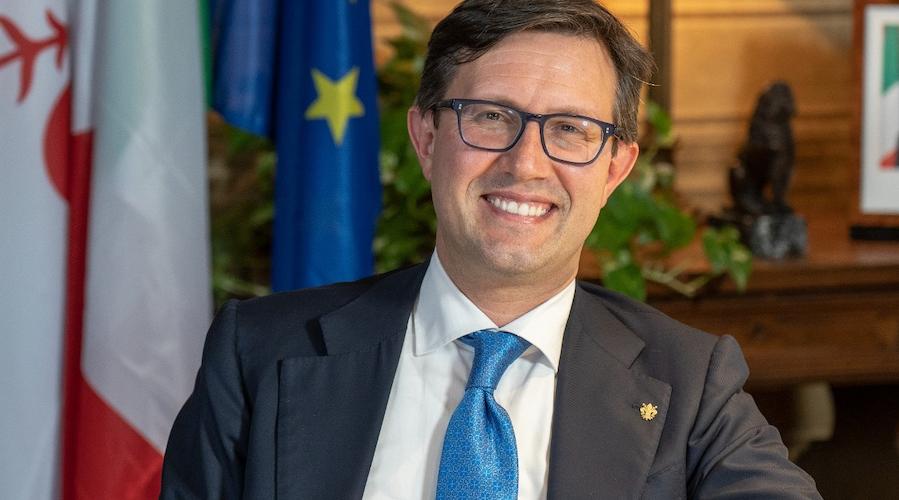
January 13, 2026. Organized by MEP Dario Nardella at the European Parliament in Brussels, this high-level event took place at a crucial moment in the European Union’s journey towards climate neutrality. It was not a rhetorical exercise in green transition, but a concrete attempt to refocus the debate on a basis of political seriousness, regulatory coherence, and scientific evidence.
In his opening remarks, as Nardella himself emphasized, the need to overcome years of ideological conflict and address the issue of decarbonizing transport with a pragmatic approach, based on solutions that are already available and can be implemented immediately, was clearly demonstrated. In this context, it was stressed that Europe can no longer afford to postpone the full activation of the potential of sustainable biomass and waste-derived raw materials, which can already be integrated into existing infrastructure.
In this context, the distinction between biofuels and electrofuels was established and reiterated throughout the debate.
As Luigi Scordamaglia, CEO of Filiera Italia and President of EAT Europe, emphasized, biofuels represent an already operational, scalable, and readily available solution, capable of immediately reducing emissions and generating value throughout the entire agricultural, industrial, and energy supply chain. In contrast, electrofuels, while relevant in the long term, remain tied to high costs, the availability of green hydrogen, and technological processes that have not yet demonstrated true industrial maturity. It was stressed that confusing these two timeframes risks slowing down urgent decision-making and weakening existing supply chains, rather than fostering innovation.
The debate among policymakers, industry, the agricultural sector, and the scientific community has contributed to redefining the very concept of sustainability. True sustainability, as has been repeatedly demonstrated, does not mean preemptively excluding entire supply chains or imposing a single technological path, but rather the ability to create opportunities for all actors in the value chain.
The message that resonated throughout the event, clearly highlighted in Ambassador Antonio Canaparo’s closing remarks, is that the transition cannot simply be “green” in the abstract, but must also be economically and socially sustainable. It must create jobs, strengthen European supply chains, and guarantee energy security and territorial cohesion. In this context, the Italian position that emerges from the debate does not defend the past, but proposes a vision for the future, based on evidence, data, and a pragmatic approach to decarbonization. Only a coherent, technologically neutral, and reality-based transition can be truly lasting.