

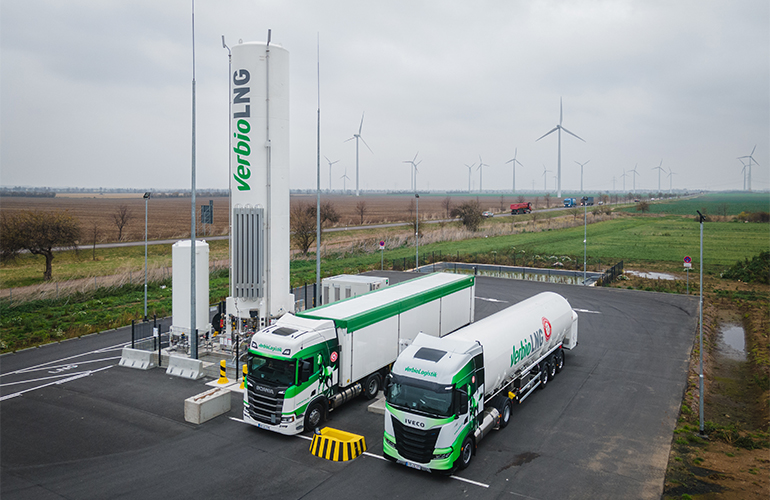
November 7, 2026. Following several quarters of stagnant sales, the third quarter of 2026 marked a positive turn: 47,335 tons of liquefied natural gas (LNG) were refueled at German service stations. This figure represents an increase of approximately 18% compared to the same quarter of the previous year and stands as the second-highest volume recorded since tracking began in 2019. Infrastructure has also continued to expand: Bio-LNG is now available at more than 210 service stations across Germany.
“Bio-LNG combines a cost advantage over diesel with significantly lower greenhouse gas emissions,” states Dr. Timm Kehler, a board member of the association *Die Gas- und Wasserstoffwirtschaft* (Gas and Hydrogen Economy). In the first half of 2026, the average price of Bio-LNG was around 0.75 euros per kilogram. Meanwhile, the Federal Association for Road Haulage, Logistics and Waste Management (BGL) reports a price of 1.50 euros per liter of diesel for large-scale consumers. Consequently, the price of Bio-LNG per kilogram was roughly half the benchmark price of diesel per liter. This advantage is primarily due to the fact that the fuel is produced regionally, making it independent of price fluctuations in international fossil energy markets. “Bio-LNG does not have to pass through the Strait of Hormuz,” Kehler points out.
As a result, distributors can offer long-term price stability, which is a major advantage for transport and logistics companies: it provides a reliable basis for cost calculations and facilitates planning. At the same time, Bio-LNG improves the climate footprint of heavy-duty transport. In the third quarter of 2026, the recorded volume of Bio-LNG resulted in savings of over 370,000 tons of CO2 equivalents compared to diesel; extrapolating this figure to the full year, the association anticipates savings of nearly 1.5 million tons. The share of biomethane was 100%, consistent with the first half of the year.
Largely due to these positive results, the association is calling for the climate-protection contribution of renewable fuels to be taken into account within the toll system for trucks. Specifically, the federal government should establish the necessary legal framework to ensure that the CO2 component of the toll for Bio-LNG reflects its actual emissions balance, rather than grouping it—as is currently the case—in the same category as diesel. In this regard, Kehler notes: “Bio-LNG’s contribution to climate protection should also be reflected in the toll. At a minimum, Bio-LNG should be placed in CO2 emission class 4.”