January 27, 2026. The use of liquefied natural gas (LNG) in freight and passenger transport will allow users to access a much more economical and environmentally friendly fuel compared to diesel and/or LPG, stated the Minister of Energy and Mines, Luis Bravo de la Cruz, from the city of Trujillo, in the La Libertad region.
During the first forum “Towards the Energy Transition to LNG and the Future of Transportation in Peru,” Bravo confirmed that Peru has sufficient natural gas reserves, and that the Ministry of Energy and Mines (MINEM) is promoting the energy transition towards this resource.
“Peru has the reserves and production capacity to meet demand, promptly and in the required quantity. Expanding the use of LNG would eliminate the need to import liquid fuels and allow us to achieve energy independence,” he emphasized.
The Minister delivered a presentation titled “Importance of the Massification of LNG and its Impact on the Competitiveness of the Transportation Sector and Sustainability,” highlighting the importance of this resource as an agent of economic transformation and energy transition.
He added that the General Directorate of Hydrocarbons (DGH) of the Ministry of Energy and Mines (MINEM) approved the Annual Promotions Program (PAP) of the Energy Social Inclusion Fund (FISE), which includes resources for the conversion and/or partial financing of the purchase of heavy vehicles dedicated to natural gas, and for engine conversion and transformation.
The head of MINEM detailed that, to date, 162.852 light vehicles originally powered by gasoline and LPG have been converted to compressed natural gas (CNG), and 944 heavy vehicles have been converted from diesel to CNG.
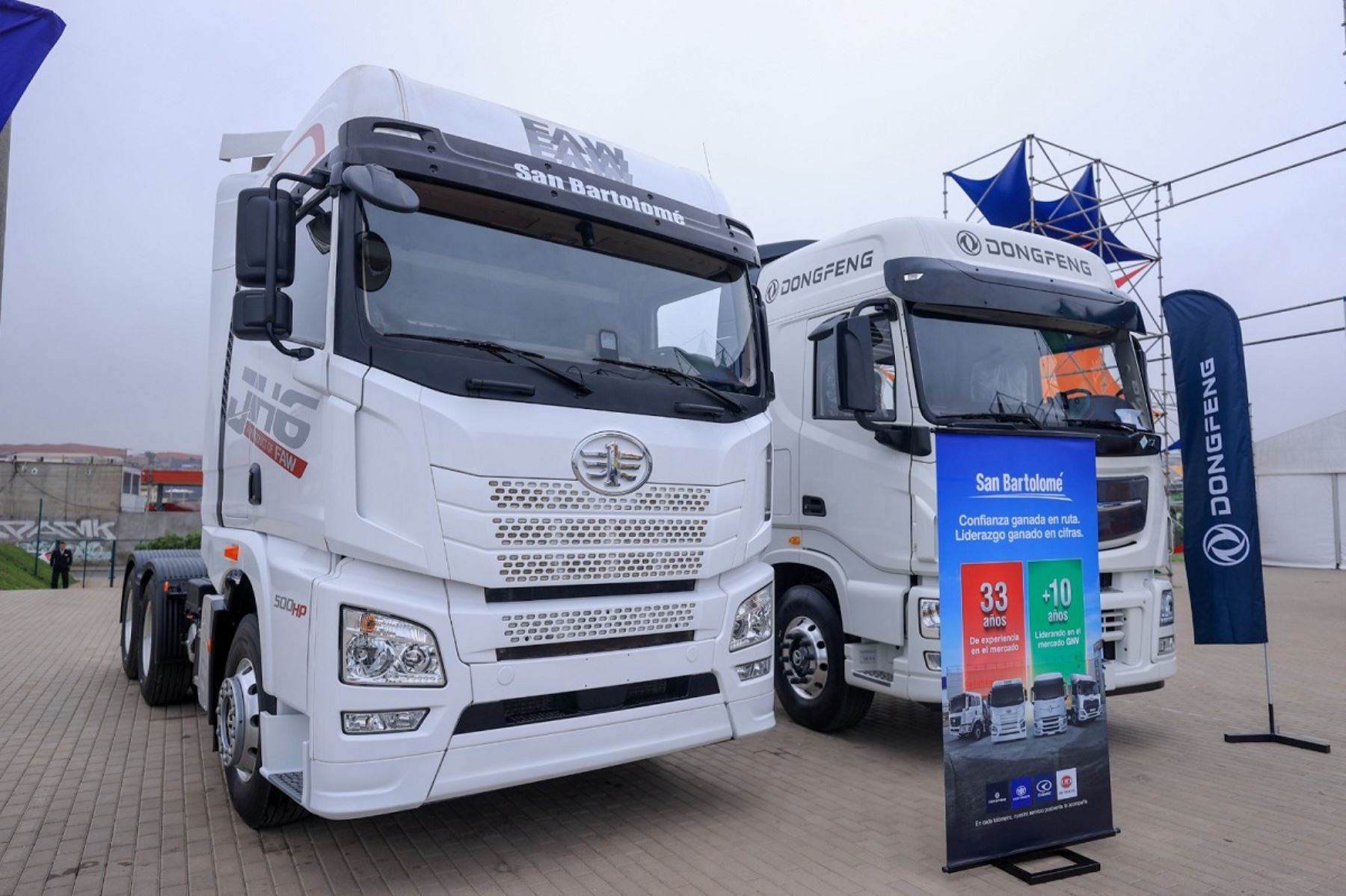
Bravo stated that L-NGV is lighter than compressed natural gas, and has optimal performance that allows a range of between 400 and 500 kilometers on a single charge, in addition to generating fuel savings and ensuring sustainability due to its lower environmental impact.