
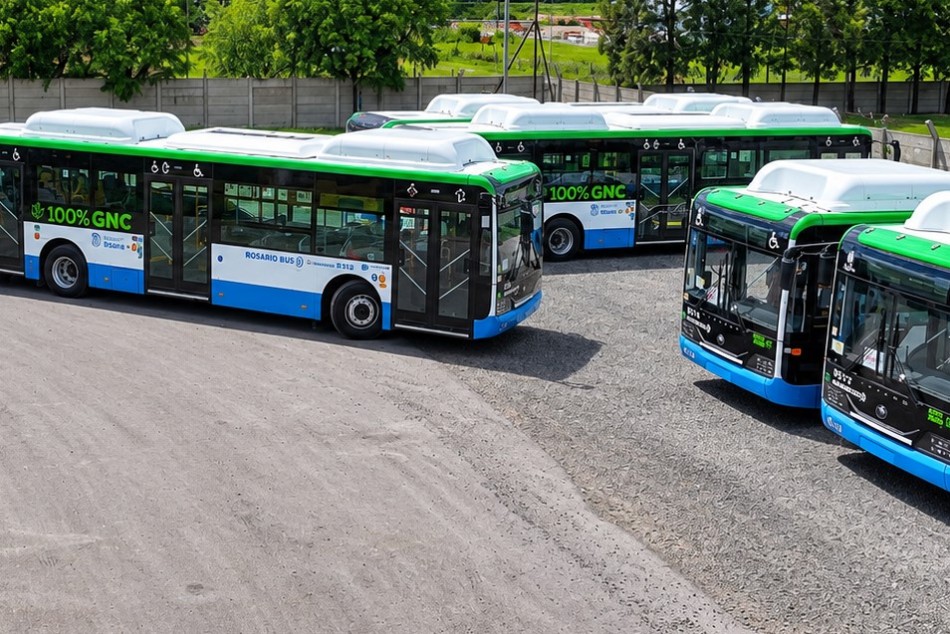
November 18, 2026. The Municipality of Rosario, in the Argentine province of Santa Fe, has introduced the first 48 compressed natural gas (CNG) buses into its urban transport system. These are part of a planned total of 93 units, which will allow for the renewal of 15% of the entire fleet.
This initial batch of new vehicles has been assigned to line 103; they are already operating on city streets, connecting the city from south to north and passing through the central area.
The buses are manufactured by Yutong—specifically the CNG ZK6126 HG model—and feature various technological, comfort, and operational characteristics that distinguish them from the diesel-powered vehicles currently in service.
In terms of their aesthetic design, the buses feature a specific color scheme: green on the roof, representing the sustainability of CNG fuel; white, symbolizing the reduction in carbon monoxide (CO), nitrogen oxide (NOx), and carbon dioxide (CO2) emissions, thereby lowering the environmental impact; and the city’s signature cyan, which maintains the established visual identity of the urban public transport fleet.
Another notable feature is that refueling takes place before the vehicles enter service, during the time they are not in operation. The fuel storage system is located on the roof, and the buses have a range of over 350 km, allowing them to complete a full day’s service.
It should be noted that, prior to this rollout, various pilot tests were conducted to verify the operational characteristics, usage, and performance conditions of the vehicles, ensuring they meet international safety standards.
The Municipality of Rosario has introduced CNG-powered vehicles, establishing the first energy-efficient corridors for urban transport. This initiative achieves the widest possible coverage through a service that is less polluting, quieter, and incorporates more advanced technology.
Furthermore, the use of this type of fuel reduces the municipality’s costs by approximately 50%. This helps ease the burden on the local government in maintaining the system’s sustainability—a particularly significant factor given the elimination of national government funding.