
September 14, 2025. Participation in the Gastech 2025 Exhibition and Conference represented an important international opportunity dedicated to the future of the energy sector. It was an opportunity for industry, institutions, and research to discuss the challenges of the energy transition, with particular attention to the role of new technologies, synergies between stakeholders, and necessary investments.
A key topic was artificial intelligence and digitalization, increasingly strategic tools for training the next generation of engineers, political leaders, and innovators committed to developing a low-carbon economy.
To address the so-called energy trilemma (security, affordability, and sustainability), the need to focus on innovation, technology sharing, and collective investment clearly emerged. In this context, the role of natural gas, methane (CNG and LNG), hydrogen, and nuclear energy must always be considered in terms of their compatibility with a transition aimed at sustainable decarbonization.
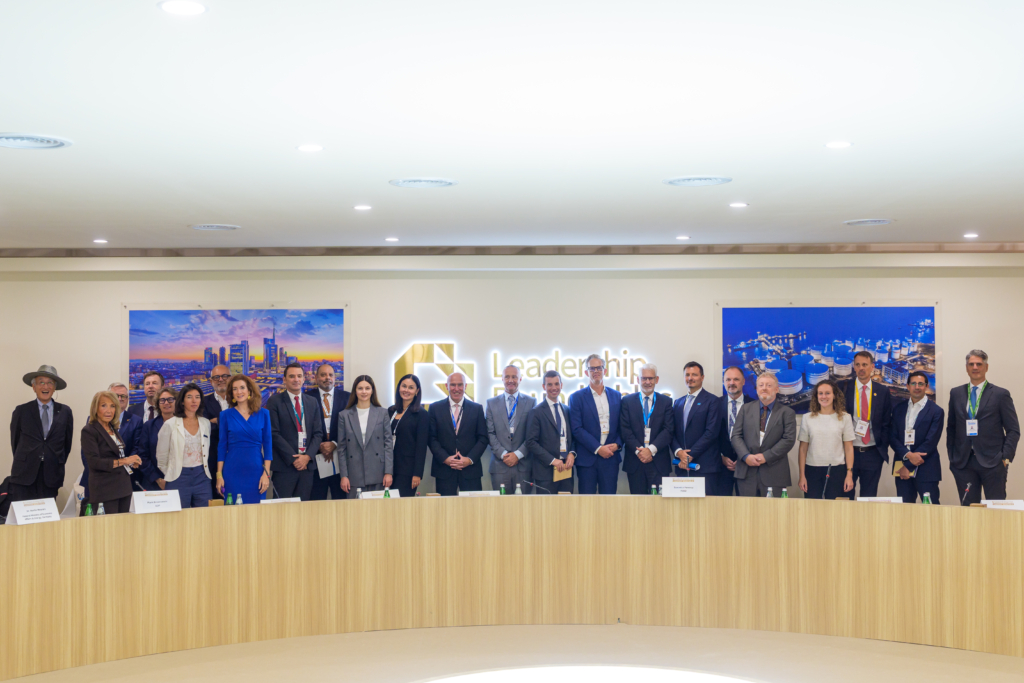
At the Roundtable “Impactful and Competitive Pathways to Decarbonize the European Energy System” (Milan, September 10), Mariarosa Baroni, President of NGV Italia, emphasized that “the first step toward a concrete acceleration of the technological transition in transport is a thorough review of the regulations accompanying the European Green Deal package, which are currently completely abstract and out of step with real market dynamics.”
The leader also reiterated the need for a rapid transition that emphasizes the principle of technological neutrality, thus enabling a robust decarbonization of the system.
“All technologies capable of ensuring a carbon footprint compatible with decarbonization goals can and should work together,” Baroni emphasized, recalling that biomethane currently represents a concrete solution, while hydrogen represents a medium-term strategic perspective.
Another crucial point concerns the need to review the penalties imposed on original equipment manufacturers (OEMs) under EU regulations, which are considered unrealistic, in favor of public incentives to support families and businesses willing to invest in innovation. “Greater flexibility is needed in regulatory content and timelines to take into account objective differences in ecosystems between Member States,” Baroni concluded.
NGV Italia’s presence at Gastech 2025 confirmed the association’s role as a national and international benchmark in the debate on the energy transition. The event highlighted the importance of an integrated approach based on innovation, collaboration, and regulatory realism as a necessary condition for guiding Europe toward competitive and sustainable decarbonization.