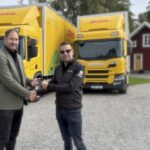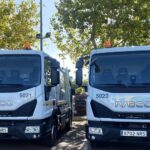


February 7, 2026. TransTony SRL, a company with over 30 years of experience in the Argentine market, presented its new Scania compressed natural gas (CNG) units at its Zárate operations base. These units have been added to its logistics operations in partnership with Toyota Tsusho Argentina. This acquisition is part of a strategic alliance aimed at advancing towards increasingly sustainable and efficient transportation, in line with the environmental objectives of the companies involved.
With a total fleet of 100 vehicles, TransTony primarily operates in the automotive and auto parts transportation sector, collecting and transporting goods from the production chain to the terminals. Currently, 20% of its fleet consists of Scania units in various configurations—mainly 4×2 and 6×2—as part of a progressive renewal process that the company has been pursuing for several years. In this context, the incorporation of CNG trucks responds both to a strategic decision made by the company itself and to the guidelines of its main freight providers, further consolidating a relationship with Scania that began 15 years ago and has strengthened especially in the last decade, with the sustained addition of diesel units and, more recently, CNG trucks.
“We have always been committed to reducing the environmental impact of our operations. Sustainability is a central focus of our decisions, both personally and professionally,” stated Eduardo De Vincenti, Managing Partner and Director of TransTony.
Hernán González, TransTony’s Logistics Operations Manager, explained that the Scania CNG units operate within Toyota Argentina’s logistics network, transporting auto parts along the Buenos Aires–Córdoba corridor, covering approximately 1,200 kilometers daily. “Our choice of Scania is due to the consistently positive results we have achieved. In the case of CNG, we have found a superior product,” he affirmed.
From Toyota, Agustín García, Head of Local and Regional Auto Parts Logistics, explained that the company’s sustainability strategy aims to achieve carbon neutrality in the medium and long term. “The first step on that path is the incorporation of CNG-powered vehicles, and in parallel, we are working towards the use of biomethane, which would allow us to achieve a reduction in CO2 emissions of close to 95%,” he noted.