
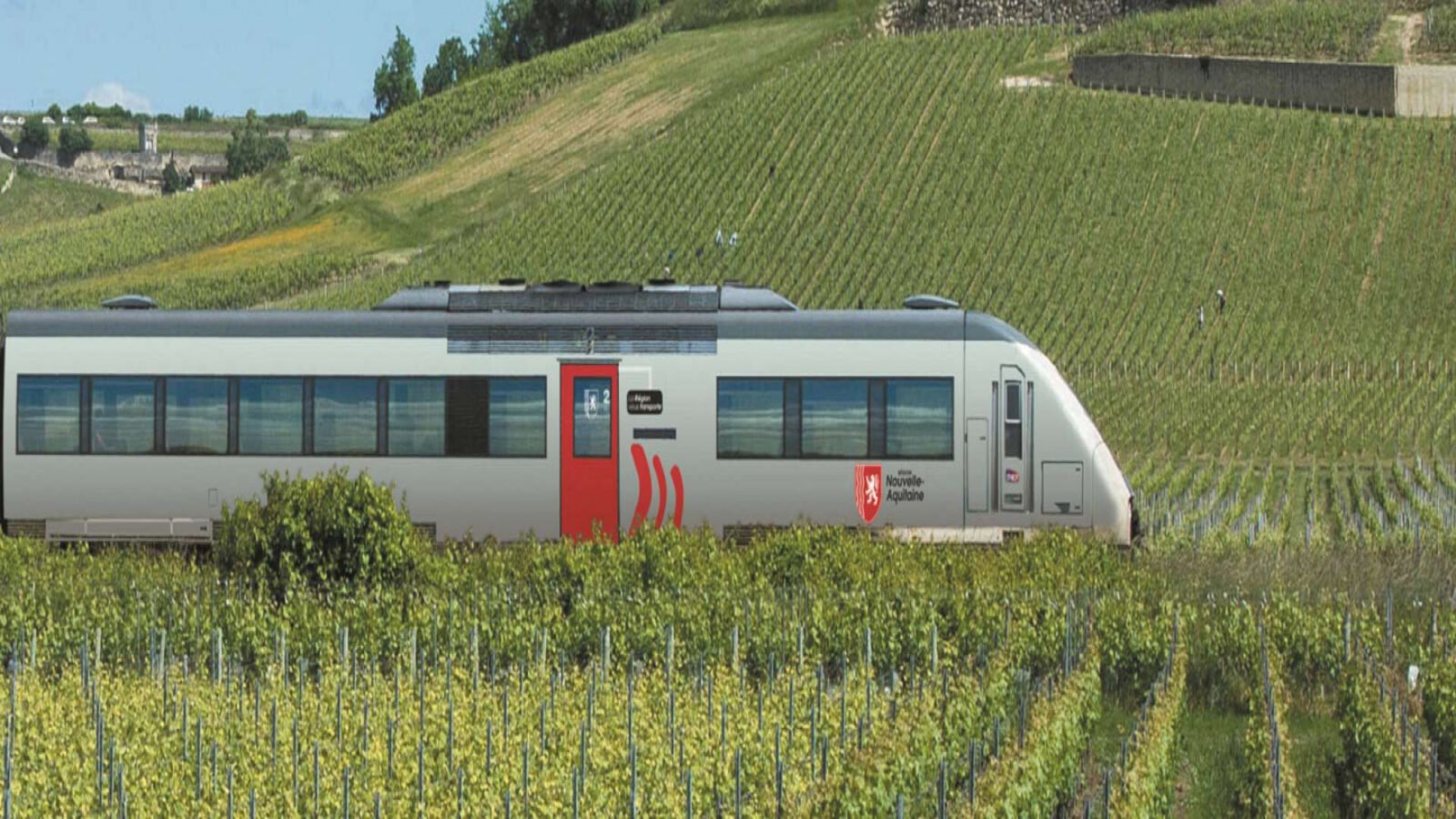
March 25, 2023. Committed for several years to a reflection on the transition to biogas for some of its trains, the French Region of Nouvelle-Aquitaine is launching a new feasibility study with GRDF, SNCF Voyageurs and Ferrocampus whose objective is to define the necessary conditions to assemble a first demonstrator based on a redesigned version of the ATER X73500 series.
“Bio-NGV fuel has environmental benefits by significantly reducing local emissions of pollutants and CO2. It is increasingly carbon-free as soon as the biomethane from the methanation units is injected into the networks”, recall the different partners in a joint press release. It is a real lever to quickly decarbonize rail transport at acceptable costs in a territory whose lines are insufficiently electrified (62% compared to 55% national average).
Presented as “phase 2” of the project, the new study carried out jointly by the Region, GRDF, SNCF Voyageurs and Ferrocampus aims to deepen the reflections already made in the first three reports carried out in 2019, 2021 and 2022, which made it possible to clarify the technical, environmental and financial aspects, but also to assess the technical and economic feasibility of modernizing existing wagons.
More focused on an operational aspect and with an estimated cost of 100,000 euros, the new study will focus on the transformation of the ATER X73500 series units. Specifically, it aims to define the necessary conditions for the implementation of a first demonstrator that should be carried out directly at Ferrocampus, a European center of excellence dedicated to railways based in Saintes, in the Charente-Maritime.
“This technological option would make it possible to decarbonize at a controlled cost and in a reasonable time the 53 trains in the fleet, whose residual life is estimated at 20 years, taking advantage of the methanization capacities of Nouvelle-Aquitaine”, underline the regional authorities.