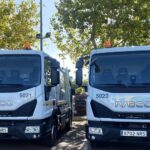


September 12, 2022. Gas-powered trucks (CNG/LNG) are a solution to reduce carbon emissions, and the authorities should include them in the Rabla and Rabla Plus programs, according to a study developed by Deloitte and E3M at the request of the Employers Confederation of Concordia. In Romania, approximately 77% of goods are transported by road.
Last year, more than 9,500 gas-powered heavy vehicles were registered in the European Union, which represents 4% of the total volume of the sector.
In 2020, the trucks dedicated to this segment represented 11.1% of the vehicle fleet nationwide.
“The gas-fueled units will contribute to achieving the goal of net zero carbon emissions by 2040, thanks to biomethane and its decarbonisation potential,” said Andrei Gagea, General Director of Iveco Romania.
Adoption of this type of powertrain will increase after 2025 as low emission technologies mature.
The LNG infrastructure in 2030 would be the most developed compared to other alternative fuels (except electricity), provided that the transition towards reducing the use of fossil fuels is accelerated.
According to Gagea, the transition to cleaner energy sources in the transport sector can be done through cooperation with strategic partners, but political support is also necessary.
The study reveals that road freight transport will remain the dominant transport mode in 2030, with internal combustion engines declining 84.5% from 98.4% in 2020.
The results of the study were presented at a conference attended by the Minister of European Funds, Marcel Boloș, the State Secretary of the Ministry of Environment, Water and Forests, Bogdan-Radu Bălănișcu, and the European Commissioner, Adina Vălean.
In Romania, the transport sector is responsible for 16% of total greenhouse gas emissions.
According to the rules imposed by the European Commission through the “Fit for 55” package, Romania must guarantee that 18% of the energy used in transport comes from renewable sources.
To achieve these goals, Romania needs €73 billion to modernize the entire network.