

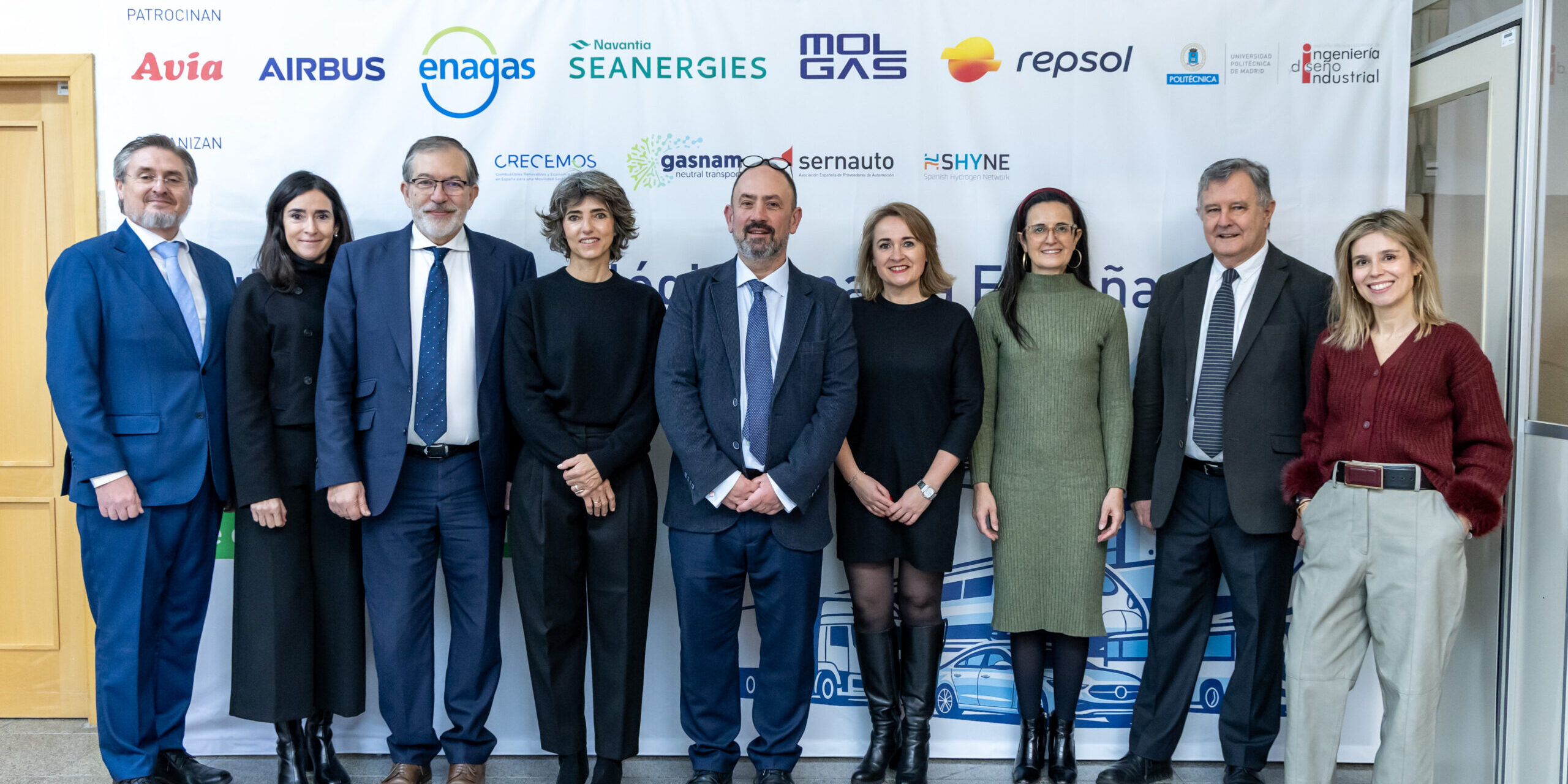
January 25, 2026. The decarbonization of transport requires an approach based on technological neutrality, capable of integrating all available solutions in a complementary way and adapting to different sectoral realities. This was one of the main conclusions of the meeting “Technological Neutrality, Brand Spain,” organized by CRECEMOS, Gasnam, SERNAUTO, and SHYNE. The event, which was opened by Teresa Parejo, Director General of Industrial Strategy and SMEs at the Ministry of Industry and Tourism, brought together more than 150 representatives from the industrial, energy, transport, and public administration sectors in Madrid.
During the meeting, the speakers agreed that achieving European and national climate goals requires a gradual and technologically inclusive approach that combines different possible solutions, such as renewable fuels (liquid and gaseous) and electrification, especially in transport sectors that are more difficult to electrify, such as heavy road, maritime, air, and rail transport.
In this context, it was emphasized that decarbonizing transport does not depend on a single solution, but rather on a set of complementary alternatives, including liquid and gaseous fuels (such as biofuels, biogases, synthetic fuels, and hydrogen and its derivatives), as well as lower carbon-intensity fuels, which allow for emissions reductions and adaptation to the needs of different transport modes, often leveraging existing infrastructure and technologies.
The meeting concluded with a message shared by all participants: technological neutrality is a strategic advantage that has enabled progress in decarbonizing transport without compromising competitiveness, employment, or industrial leadership.
The organizing entities stressed the need for stable regulatory frameworks, clear signals to the market, and public policies aligned with technological reality, which will consolidate Spain as a European benchmark in clean mobility solutions under the umbrella of the Spain brand.


