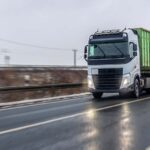
February 23, 2026. Gas-powered vehicles continue to play a crucial role in reducing greenhouse gas emissions in the transport sector, especially in road freight. New figures show that last year, almost 100% of the fuel used at German refueling stations was Bio-LNG, i.e., liquefied biomethane. This means that these vehicles operate with a virtually climate-neutral footprint.
The use of Bio-LNG has become firmly established in heavy transport and demonstrates the widespread availability of renewable fuels. In 2025, a total of 166,513 tons of LNG were sold at German refueling stations (in 2024: 176,814 tons). Of this amount, 98.5% was biomethane. The German Federal Environment Agency estimates that the use of biomethane in the transport sector reduced greenhouse gas emissions by approximately two million tons of CO2 equivalent in 2024.
This development is supported by a high-performance infrastructure. There are currently more than 199 LNG refueling stations in Germany, enabling the use of LNG and Bio-LNG in domestic and international heavy goods transport. This fulfills a key requirement for environmentally friendly logistics: it is now crucial to utilize and continue developing this infrastructure.
“Bio-LNG demonstrates that we don’t have to wait for future solutions in the transport sector to effectively reduce emissions,” says Dr. Timm Kehler, CEO of the German Gas and Hydrogen Industry Association. “The fuel is available, the vehicles are on the road, and the refueling station infrastructure is operational. What is lacking are reliable policy frameworks that guarantee the long-term viability of this environmentally friendly fuel and enable its further expansion.”