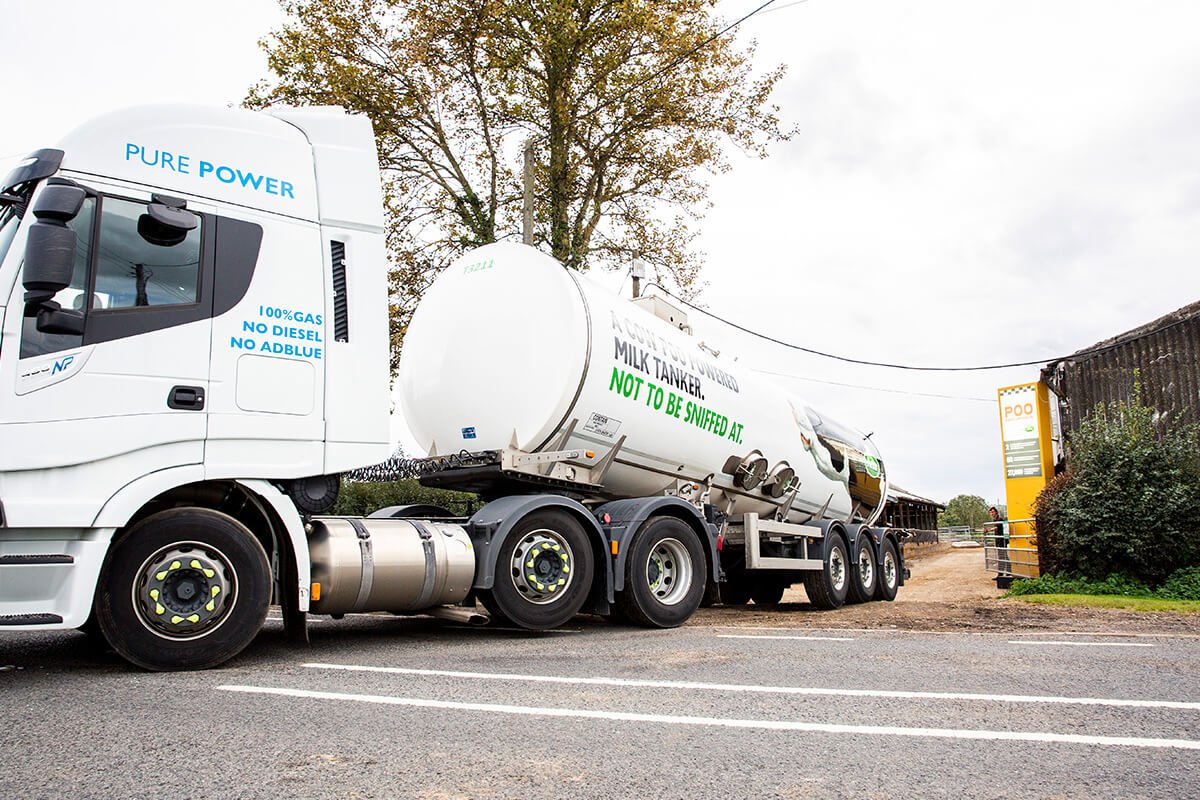
November 28, 2022. Arla, the largest dairy cooperative in the United Kingdom, called on the British government to invest massively in biogas production units from farm slurry and manure. With an estimated deposit of 100 million tons, more than 8,000 million cubic meters of biomethane could be produced.
It is not the first attempt at “poo power” that Arla undertakes. Since 2020, the dairy cooperative has put two biogas milk collector trucks into service that used the manure of 500 cows transformed annually into 27,000 liters of biofuel. The initiative was completed in the following months with the commissioning of seven additional vehicles using biogas (produced from food waste and manure from its Hatfield distribution site).
Amid concerns about the cost of energy and preparing for potential power outages in the coming months, Arla stresses that manure and other sludge are a mine of energy that must be used. Subject to adequate government support, almost 91 million tons of manure and 10 million tons of food waste could be transformed into 8 billion cubic meters of biomethane. That’s enough to heat 6.4 million homes or run around 3.8 million buses and trucks in the UK.
Beyond the strictly economic issue, a clear option for the development of biomethane would accelerate the entry into circulation of vehicles that run on Bio-NGV, which would mean a significant reduction in CO2 emissions. In addition, the use of digestate, resulting from the anaerobic digestion process (transformation of manure into gas), instead of fertilizer on crops, would further reduce farm emissions by 7%.