

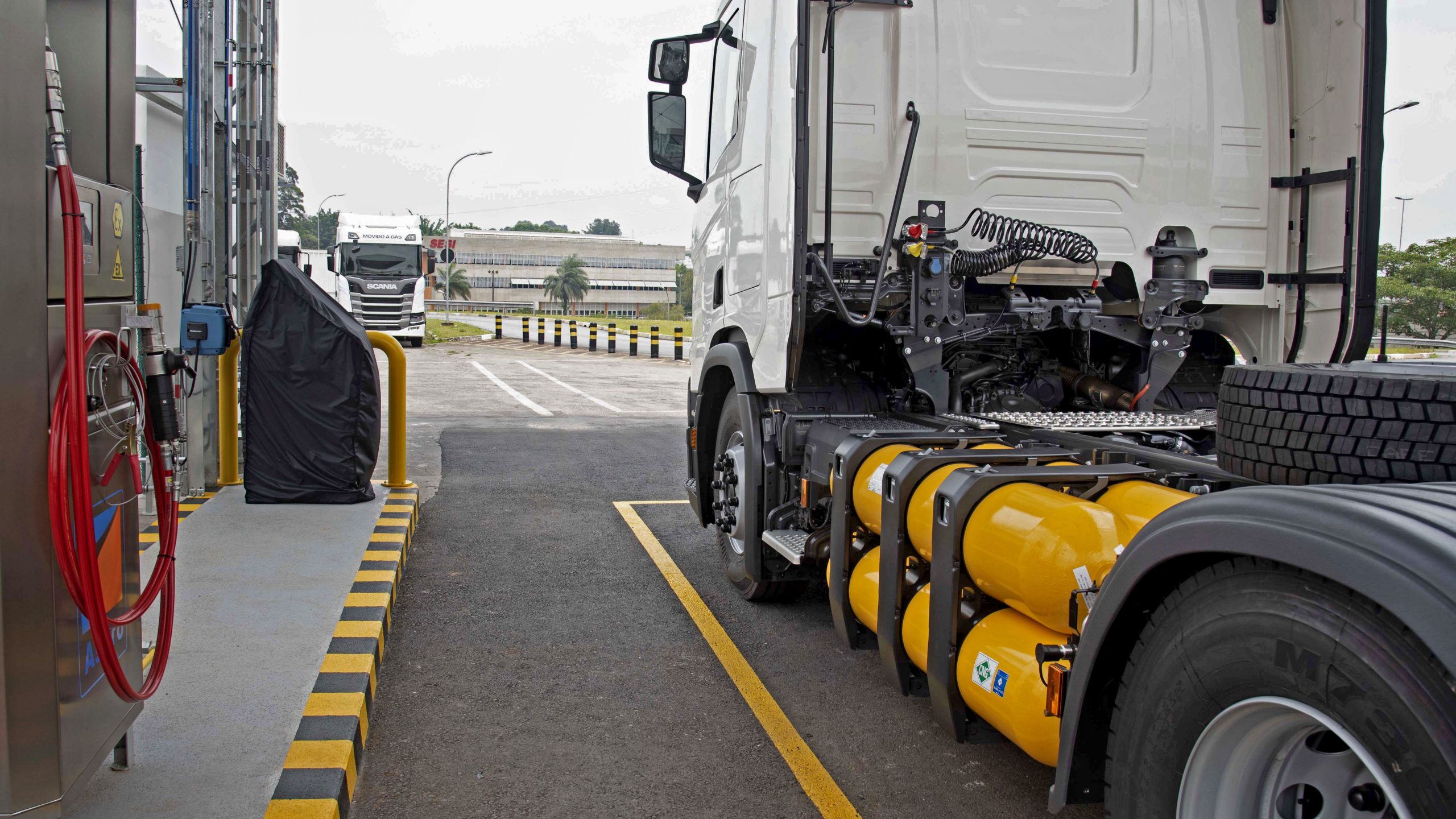
December 12, 2023. Comgás, the largest distributor of piped natural gas in Latin America, has actively participated in the development of the so-called “blue corridors”, an infrastructure created to allow the use of natural gas as fuel in heavy vehicles.
Currently, Comgás’ blue corridors already have 33 stations on highways, of which 10 are already equipped with high-flow systems that supply each truck in less than 20 minutes. Today, more than 600 trucks are already operating in Brazil and it is projected that more than 5 thousand will be able to refuel at stations in the company’s concession area until 2030.
With the adaptation of the CNG truck supply system, the station’s service capacity is expanded, optimizing the operation with a more agile and efficient process. The initiative to carry out the adaptation arises to cover a need for truck drivers who need agility in refueling, in addition to improving accessibility to gas stations, guaranteeing better service.
There are many advantages of installing the CNG kit, since, in addition to being more economical, the fuel is less polluting compared to other fossil fuels. “The growing need for solutions that reduce environmental impact, in addition to performance, savings, easy installation and maintenance and high availability, make CNG an excellent option for fleet managers, whether owned or rented, light or heavy,” says Gabriel Carvalho, CNG Business Consultant at Comgás. When evaluating the cost of fuel in heavy vehicles, considering the perfromance of natural gas and diesel and the average prices of these products at the stations, the savings of CNG exceeds 15% per kilometer traveled compared to diesel. Another advantage that stands out in the case of heavy fleets is related to the environment. In addition to reducing greenhouse gas emissions by up to 20%, the generation of local pollutants and particulate matter exceeds 90%. “Natural gas practically eliminates the black smoke ejected by conventional truck engines,” highlights Carvalho. It should be noted that the distribution of natural gas to the stations is carried out through pipelines, a process that minimizes the risk of shortages, as can occur with other types of fuels that have a significant proportion imported and are distributed by trucks.
The savings from CNG in heavy vehicles can be even greater when applied to customized projects, and Comgás has increasingly acted to encourage the creation of filling stations in transportation companies and industries, which can reduce the cost of transportation as a whole. If a logistics company manages to install its own service station within its headquarters, the fuel savings can range between 30% and 40% compared to diesel sold at conventional stations. Comgás has already carried out all the mapping of the main routes in the concession area, based on the highways with the highest truck flow. The study foresees high flow stations for trucks every 300 kilometers on these highways, in order to allow trips taking into account autonomy and current legislation for drivers’ rest. Based on the study carried out on the corridors and sales projections for the truck market, the company estimates that around 80 stations on the highways could be connected or capable of supplying trucks in the next 10 years. The stations that are being adapted to serve trucks see gas sales increase significantly, since consumption is much higher than that of passenger cars. The estimate is that each station that serves trucks sells between 150 and 220 thousand cubic meters per month.