
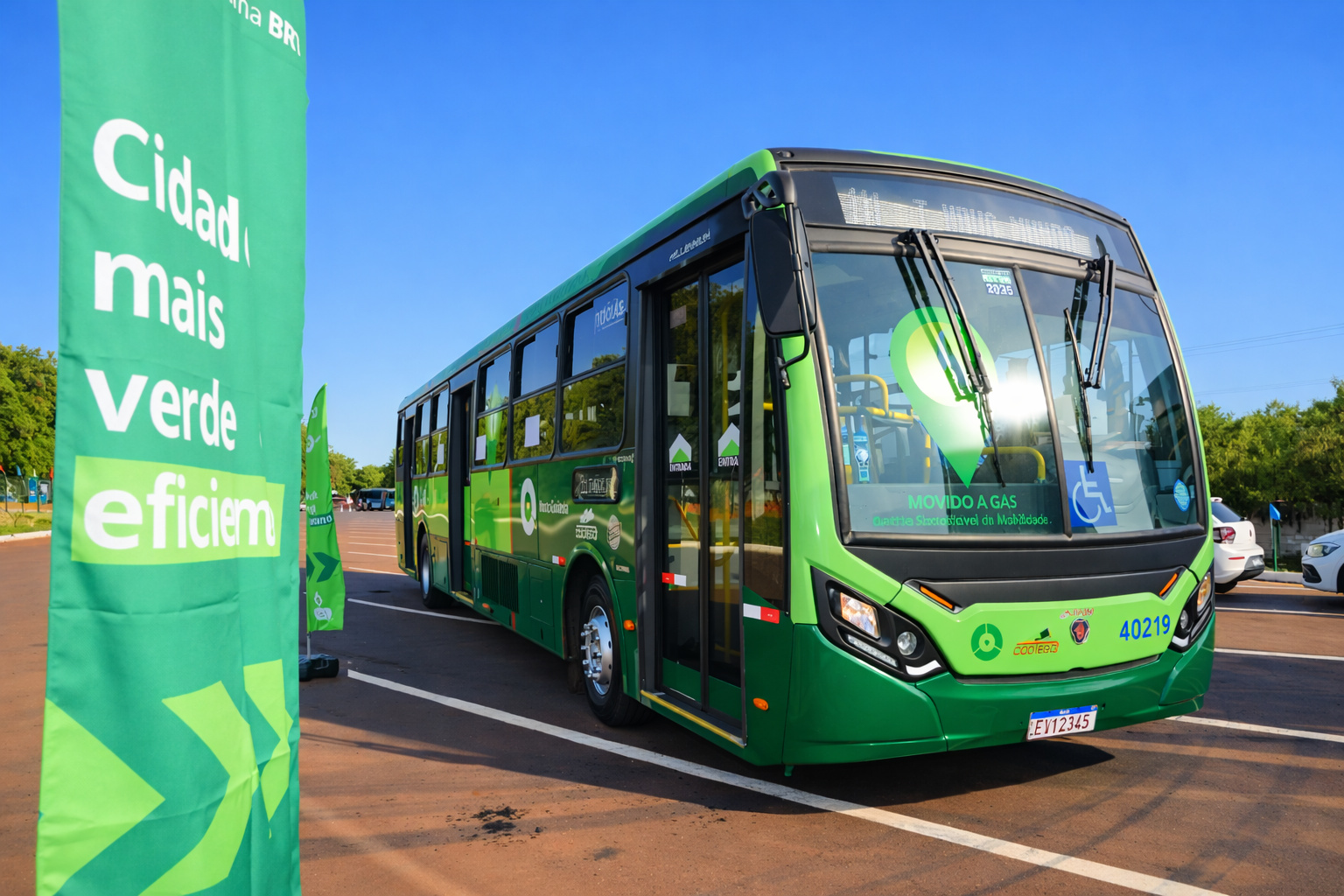
January 30, 2026. The Goiás State Government, through a resolution of the Deliberative Chamber of Public Transportation (CDTC), authorized the implementation of 501 buses powered by biomethane and/or compressed natural gas (CNG) in the public transportation system of the Goiânia Metropolitan Region, Brazil.
This measure is part of the modernization and decarbonization process of the state fleet.
The new vehicles will have different configurations and sizes, all equipped with air conditioning. The fleet will consist of standard units—two-axle buses, between 12.1 and 13.2 meters long, and three-axle buses, up to 15 meters long—in addition to 79 articulated buses measuring 19.2 meters.
According to the Secretary General of the Government, Adriano da Rocha Lima, this action reinforces the new phase of public transportation, which is more modern, sustainable, and comfortable for passengers, thanks to investments derived from subsidies from the Government of Goiás and the municipalities of the Metropolitan Region.
“In addition to offering greater comfort to passengers with new air-conditioned buses, we are also thinking about the environment and promoting the creation of a production chain for the supply of these non-polluting gases in Goiás,” he emphasizes.
The buses will be distributed along the corridors with the highest demand in the Metropolitan System, especially on the East-West BRT, popularly known as Eixão, as well as on the feeder lines that serve Goiânia and neighboring municipalities. High-floor buses will be used on corridors with elevated stations, while low-floor vehicles will operate on conventional routes.
The Undersecretary of Urban and Transportation Policies, Miguel Ângelo Pricinote, stated that the Goiânia and regional system should become the largest in Brazil, and one of the largest in Latin America, to operate buses powered by biomethane and CNG. According to Pricinote, other less polluting technologies, such as electric buses and Euro 6 diesel models, will continue to be used.
Currently, the system already has electric buses from manufacturers Eletra, BYD, and Volvo, in addition to Euro 6 vehicles from Mercedes-Benz and Volkswagen.