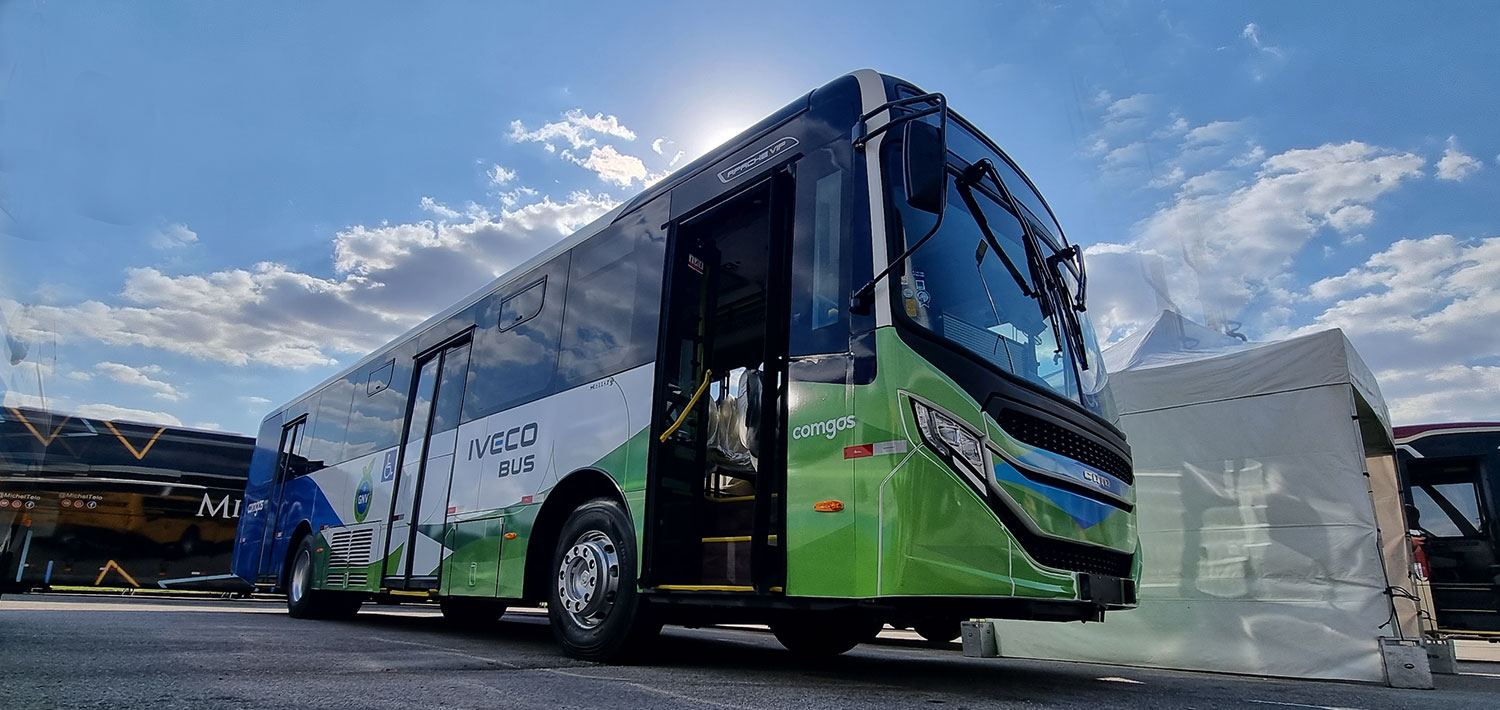
May 31, 2025. Iveco Bus offers a multi-energy portfolio globally, and in Latin America, the decarbonization strategy considers the great potential for natural gas and biomethane applications in urban transport in the region. The solution, which integrates the BUS 17-210 G chassis, serves the existing infrastructure in Brazilian cities with CNG distribution, in addition to being a viable economic and financial alternative for sustainable transport. At the invitation of ES Gás, Iveco Bus will exhibit the model during Modal Expo, the trade fair for the logistics, transportation, and foreign trade sector in Espírito Santo, from June 3 to 5, at the Pavilhão de Carapina, in Serra.
In addition to the exhibition, the brand will also participate, on June 4, in the panel “Beyond the theory: how gas engines are driving the energy transition in Brazil.” The benefits of the model, which can reduce CO2 emissions by up to 95% with the use of biomethane and provide fuel cost savings of up to 40% compared to diesel, will be presented at the event.
“Latin America has a wide range of natural gas. The expansion of the so-called green corridors in Brazil consolidates the availability of this fuel, positioning buses powered by natural gas and biomethane as an interesting alternative for urban transport decarbonization goals,” says Marcio Querichelli, President of Iveco for Latin America.
With the engine positioned at the front of the vehicle, ensuring optimized maintenance, and the option of up to 9 cylinders for storage, the BUS 17-210 G chassis is equipped with the FPT N60 CNG engine with 210 hp and 760 Nm of torque.
The model offers a range of up to 350 kilometers, ensuring operation on long-range routes in metropolitan regions. Refueling is fast and can be completed in about 20 minutes, ensuring flexibility in parking garages and less time with the bus idling.