
October 18, 2025. The official launch of the Nodo Community marked the beginning of a joint agenda between the State, industry, and users, aimed at promoting the use of compressed natural gas (CNG) and biogas in mobility and transportation, generating employment, energy savings, and reducing emissions.
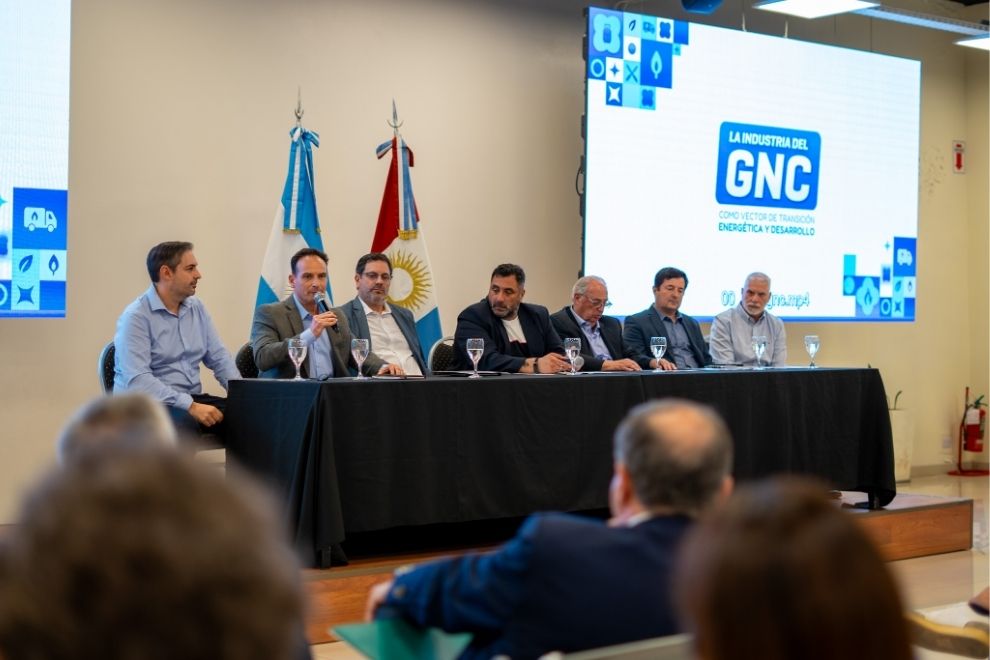
Within the framework of the meeting “The CNG Industry as a Vector of Energy Transition and Development,” held at the Ministry of Infrastructure and Public Services of the Argentine province of Córdoba, officials, businessmen and industry leaders agreed that the country is experiencing the beginning of a “second CNG revolution,” with the challenge of converting its energy potential into competitiveness, employment, and innovation.
Córdoba’s role as the epicenter of the national energy transition was also highlighted, with policies that integrate innovation, infrastructure, and sustainability.
In this regard, the Provincial Director of Biofuels and Bioenergy, Mariano Santillán, stated: “CNG is a vehicle for energy transition. The province of Córdoba views CNG as a powerful, thriving industry within the province. That is why this event is so significant: on the one hand, it highlights the potential of the province’s long-established gas network, and also the opportunities that the development of this energy vehicle offers us.”
He also highlighted the importance of using CNG from an environmental perspective, as “it reduces the carbon footprint; therefore, it is extremely important for our province to decarbonize transportation and continue promoting sustainable mobility.”
In turn, National Representative Juan Fernando Brügge, who promoted the initiative together with the Government of Córdoba, highlighted the importance of “working toward a real, federal, and productive energy transition” and thanked Governor Martín Llaryora and Minister Fabián López for supporting a process that—he noted—”must be the starting point for natural gas and biogas to be the driving forces of Argentina’s new energy matrix.”
“This second revolution is not a nostalgia for the past, but a commitment to the future,” Brügge concluded. “If we join forces, Argentine natural gas can once again move the country forward and position us as an example of energy transition in the region.”
For his part, the Undersecretary of Gas Infrastructure, Rubén Borello, emphasized that Córdoba “tripled its gas pipeline network and connected more than 1,300 industries and 300 filling stations,” which constitutes “the most important public work in the energy sector in the province.” He also announced that new lines of credit will be promoted for natural gas stations and infrastructure projects.