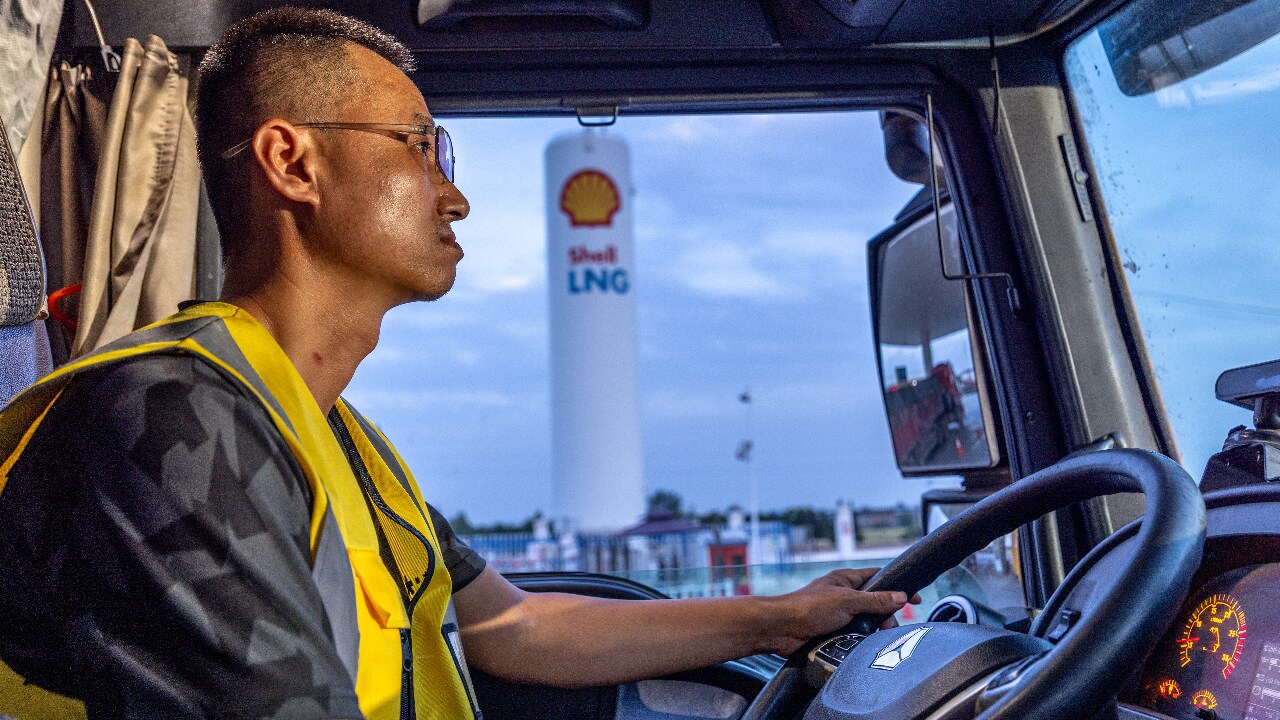
November 19, 2025. Right outside the city of Xi’an, once the gateway to the ancient Silk Road and now a major logistics hub in central China, Xuejun Ma pulls his 40-tonne truck into a Shell mobility station to fill up. It is a brief stop on a round trip from Xi’an to Urumqi and back, a long-haul, 5,000-kilometre journey Xuejun and his co-driver complete every week. “We move express online orders,” says Xuejun. “My colleague and I take turns sleeping on the small bunk behind the cabin, but the truck rarely rests.”
A bright yellow truck, its cabin neatly kept with a family photo tucked against the window, is the fifth in Xuejun’s career but the first to run on liquefied natural gas (LNG). In 2022, Yunda Express − the company he drives for − replaced 50 diesel-fueled, heavy-duty trucks at its Xi’an branch with LNG-powered alternatives. “The driving feels the same, but the difference in exhaust fumes is hard to miss – they have dropped significantly,” Xuejun says.
Xuejun’s experience reflects a shift underway in China’s road-freight industry, one of the largest in the world. According to the China Association of Automobile Manufacturers, the number of LNG vehicles on Chinese roads has almost tripled since 2019, offering other countries a vision of not only how to help reduce air pollution – but also how to cut emissions generated by heavy-duty trucking. Today, road freight accounts for 4% of global greenhouse gas emissions, more than shipping and aviation combined.
LNG can help to reduce carbon emissions compared with oil-based fuels, as well as emissions of fine particulate matter and nitrogen oxides – two pollutants linked to smog and respiratory illness. To deliver the full greenhouse benefits of LNG, methane emissions must be minimized.