June 3, 2022. With the Climate Protection Act, the federal government has set ambitious targets for the transport sector to reduce greenhouse gas emissions. By 2030, traffic emissions will be reduced to 85 million tons of CO2 equivalent. It is 48% less than in 1990. However, in 2020, the sector still generated more than 145 million tons of CO2 equivalent.
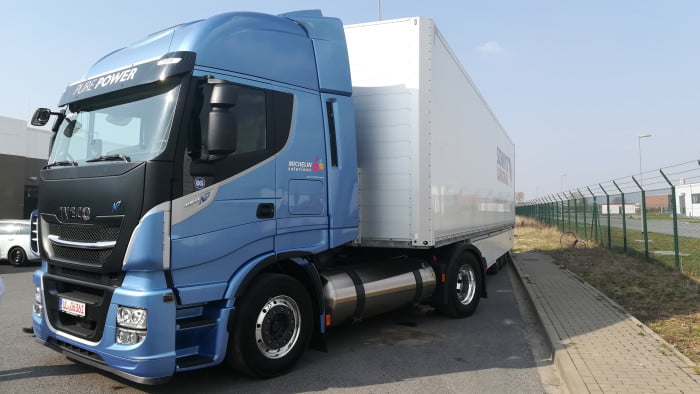
To achieve these goals, all technologies that promise greenhouse gas savings should be considered. Vehicles running on liquefied natural gas (LNG) are currently the only alternative to achieve rapid greenhouse gas reductions, especially for long-distance heavy goods traffic. Last year, sales of LNG at German filling stations increased to more than 130,000 tons. The previous year it was still 47,985 tons. By 2021, more than 100,000 tons of CO2 equivalent could already be saved by using this fuel in heavy goods traffic. Meanwhile, with Bio-LNG from waste, 314,538 tons of CO2 equivalent would have been saved with the same volume of sales.
This trend continued in the first quarter of 2022: between January and March 2022, 40,528 tons of LNG were already loaded. In March 2022 alone, the sales volume exceeded 14,000 tons. This corresponds to sales for the entire year 2019. In the first three months of this year, more than 36,000 tons of CO2 equivalent were saved.
A truck that runs on LNG already saves between 15 and 20% of CO2 compared to a diesel one. With Bio-LNG, almost climate-neutral transport can be realized in heavy goods traffic. Liquefied biogas production plants are in the process of increasing the market, so significant quantities will be available at German stations from 2024. Industry association members of Zukunft Gas: Shell, Erdgas Südwest and VNG Balance already are implementing biogas liquefaction projects.
“Gas mobility is the only market-ready technology that promises immediate greenhouse gas emission reductions in heavy-duty transport,” explains Dr. Timm Kehler, CEO of Zukunft Gas. “This climate protection potential must also be reflected in political regulations. With a rapid conversion to Bio-LNG and its associated GHG quota trading accreditation, falling prices could be achieved. In addition, carriers need medium-term planning security for trucks powered by this renewable energy,” says Kehler.